
What Is Edge Hosting and How Is It Different From Cloud Hosting?

The way we deliver websites, applications, and digital services has changed dramatically over the past two decades. For a long time, cloud hosting was the default answer for almost any project — you spun up resources in a provider’s data center and let them handle the heavy lifting. But as users came to expect instant load times, and as applications grew more real-time and data-intensive, a newer approach gained momentum: Edge hosting.
If you’re deciding where to run your next project, or simply trying to make sense of the buzz, it helps to understand exactly what edge hosting is, how it works, and where it differs from the cloud hosting you’re probably already using. This article breaks down both models, explains the technical and practical differences, and helps you figure out which one fits your needs.
What Is Cloud Hosting?
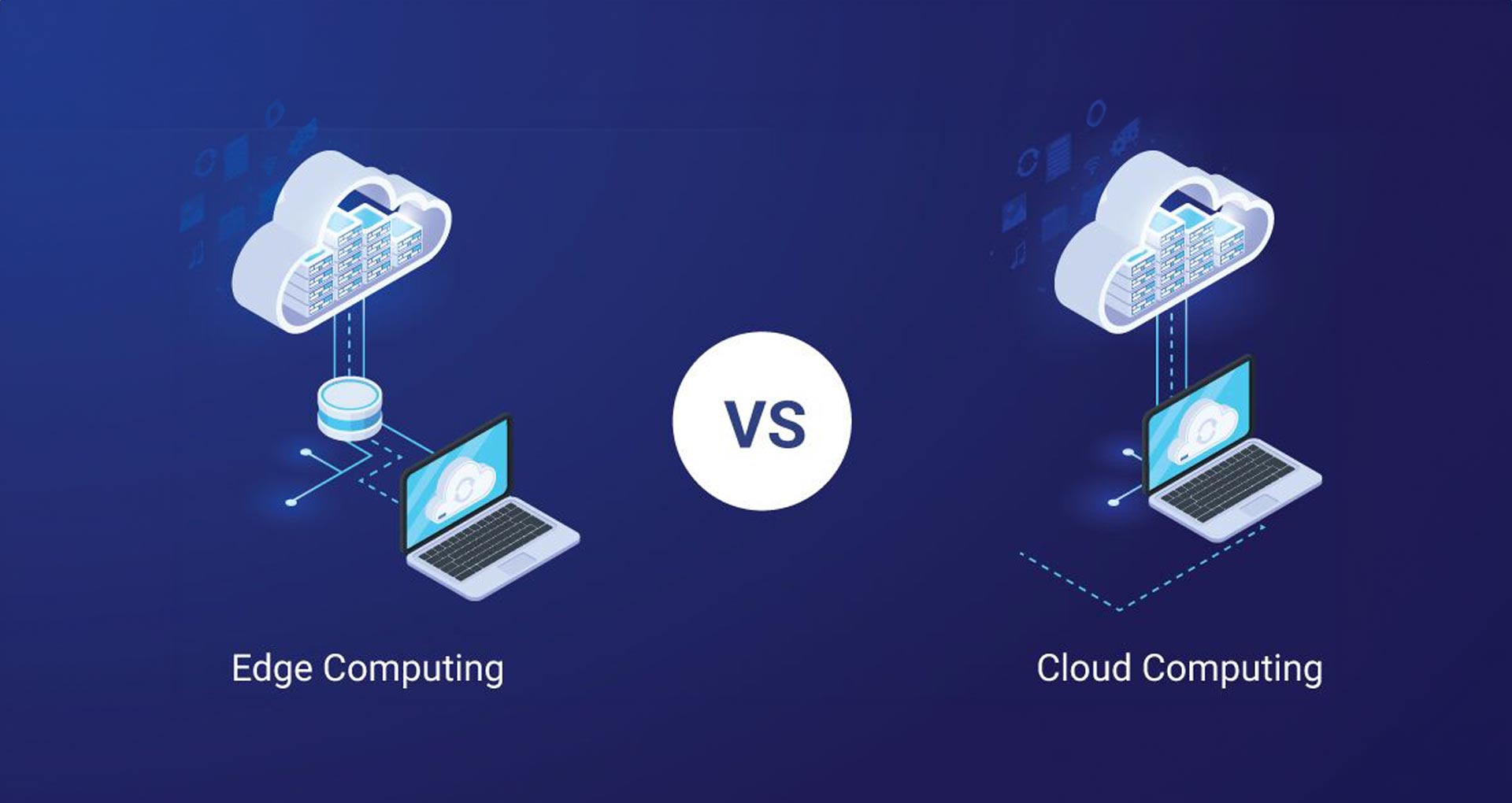
Cloud hosting is a model in which your website or application runs on virtualized resources hosted in large, centralized data centers operated by a provider such as Amazon Web Services, Google Cloud, or Microsoft Azure. Instead of owning and maintaining physical servers, you rent computing power, storage, and networking on demand.
The defining characteristics of cloud hosting are centralization and elasticity. Your resources typically live in a specific region — say, a data center cluster in Northern Virginia or Frankfurt — and requests from users travel across the internet to reach that location and back. Because those data centers are enormous, they can offer nearly unlimited compute and storage. When traffic spikes, you can scale up quickly; when it drops, you scale back down and pay only for what you use.
This makes cloud hosting exceptionally well suited to workloads that require serious processing power or large amounts of storage: databases, complex web applications, machine learning training, big-data analytics, and business software. It’s flexible, reliable, and mature, with a deep ecosystem of tools and services built around it.
The main trade-off is distance. If your data center sits in one part of the world and your users are spread across several continents, some of those users will experience noticeable delay simply because their requests have to travel a long way. For many applications, this is perfectly acceptable, but for latency-sensitive experiences it can become a real limitation.
What Is Edge Hosting?
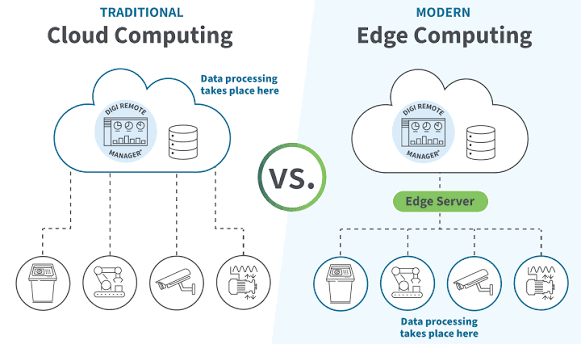
Edge hosting flips the geographic assumption of the cloud. Rather than concentrating everything in a handful of central data centers, edge hosting distributes infrastructure across many smaller locations positioned close to end users — often called points of presence, or edge nodes. The “edge” refers to the outer boundary of the network, where it meets the people and devices actually using your service.
The core idea is proximity. By placing servers physically nearer to users, edge hosting shortens the distance data must travel, which dramatically reduces latency. When someone in Tokyo visits a site hosted at the edge, their request is served from a nearby node rather than bouncing to a data center on the other side of the world.
Edge hosting grew out of content delivery networks (CDNs), which have long cached static files like images, videos, and scripts at edge locations to speed up delivery. Modern edge hosting takes this further by running actual code — not just serving cached content, but executing logic at the edge. Platforms like Cloudflare Workers, AWS Lambda@Edge, and Fastly Compute let developers run functions, personalize responses, handle authentication, and process data right at the edge node, close to where the request originated.
This distributed, compute-at-the-edge model makes edge hosting a strong fit for real-time and interactive applications: live streaming, online gaming, Internet of Things (IoT) devices, augmented reality, and any service where every millisecond of delay is felt by the user.
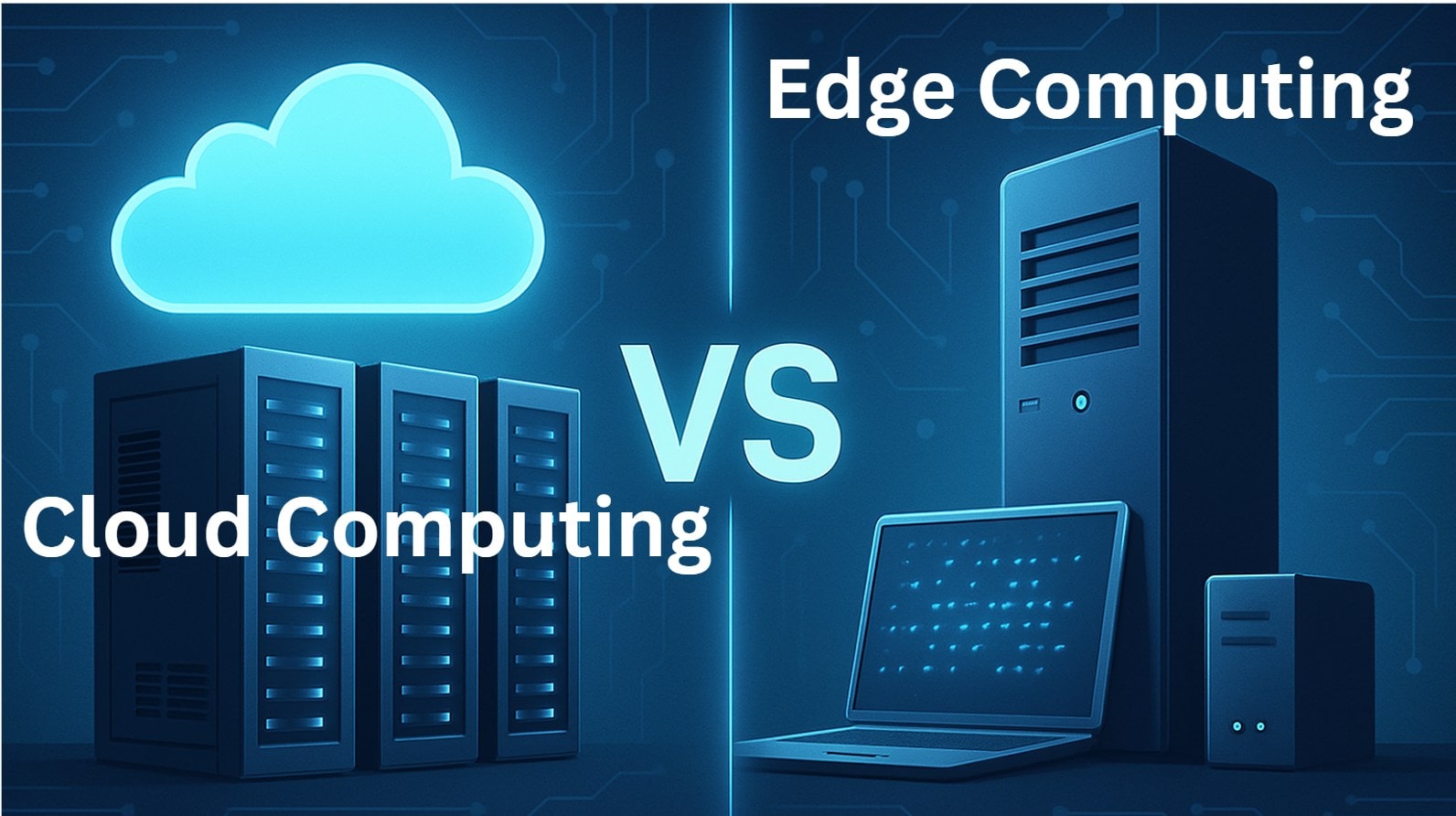
Both models host your applications and deliver content to users, but they take fundamentally different architectural approaches. Here’s how they compare across the dimensions that matter most.
Where Your Data Lives and Runs
This is the foundational difference. Cloud hosting is centralized — your resources live in one or a few large data centers, and processing happens there. Edge hosting is distributed — infrastructure is spread across many locations, and processing happens close to the user, sometimes on dozens or hundreds of nodes worldwide.
In practical terms, cloud hosting brings the user’s request to the data, while edge hosting brings the computation to the user. That single distinction ripples out into almost every other difference between the two.
Latency and Speed
Because edge nodes sit physically closer to users, edge hosting typically delivers much lower latency. Requests don’t have to cross oceans or continents to be answered, so pages load faster, and interactions feel more responsive.
Cloud hosting can offer excellent performance too, especially for users near the data center region. But for a geographically dispersed audience, latency becomes uneven — fast for nearby users, slower for distant ones. Edge hosting smooths that out by serving everyone from a nearby location.
Scalability
Cloud hosting excels at vertical and horizontal scale in a central location. Need to process a massive dataset or run a demanding application? The cloud can allocate enormous compute and storage almost instantly.
Edge hosting scales differently — it scales geographically. It’s built to handle many requests across many locations, which is ideal for distributing load. However, individual edge nodes generally have more limited resources than a central cloud data center, so they’re not designed for heavy, long-running computation or large-scale data storage. Edge is about fast, lightweight processing at scale, not raw horsepower in one place.
Bandwidth and Cost
Edge hosting can significantly reduce the amount of traffic that has to travel back to a central server, because much of the work is handled locally. This lowers bandwidth consumption and can reduce costs for content-heavy or high-traffic applications, while also easing the load on your origin infrastructure.
Cloud hosting’s pay-as-you-go pricing is transparent and flexible, but data transfer out of the cloud (egress) and long-distance delivery can add up. Cost comparisons aren’t clear-cut, though: edge hosting introduces its own pricing for distributed compute and can add operational complexity. The right choice depends heavily on your traffic patterns and workload.
Reliability and Resilience
Edge hosting’s distributed nature gives it built-in redundancy. If one node goes down, traffic can be routed to another nearby node, and there’s no single point of failure for edge-served content. This makes it resilient to localized outages.
Cloud hosting is also highly reliable, with providers offering redundancy across availability zones and regions. But an outage in a central region can affect a large portion of your users at once. Edge distribution spreads that risk across many smaller locations.
Security and Compliance
Both models offer robust security, but they present it differently. Edge hosting can improve security by absorbing and filtering malicious traffic — such as distributed denial-of-service (DDoS) attacks — at the edge, before it ever reaches your core infrastructure. Processing data locally can also help with data-residency requirements, keeping certain information within a specific region.
Cloud hosting centralizes security management, which can make it easier to enforce consistent policies, monitoring, and compliance controls in one place. A distributed edge footprint, by contrast, means securing many more locations, which can add complexity.
Complexity and Management
Cloud hosting benefits from years of maturity, extensive documentation, and a huge ecosystem of managed services. For most teams, deploying and managing applications in the cloud is a well-trodden path.
Edge hosting is powerful but more complex to reason about. Distributing logic across many nodes, keeping data consistent, and debugging issues across a global footprint all require different thinking and tooling. The technology is maturing quickly, but there’s generally a steeper learning curve.
Common Use Cases for Each
Cloud hosting is a strong choice when you need:
- Heavy computation, such as data analytics, machine learning, or complex backend processing
- Large-scale, centralized databases and storage
- Traditional web applications and business software
- Workloads where a small amount of latency for distant users is acceptable
Edge hosting shines when you need:
- Ultra-low latency for a global audience
- Real-time applications like online gaming, video conferencing, or live streaming
- IoT deployments that process data from many distributed devices
- Content-heavy sites that benefit from fast, local delivery
- Personalization or request handling that should happen close to the user
Do You Have to Choose?
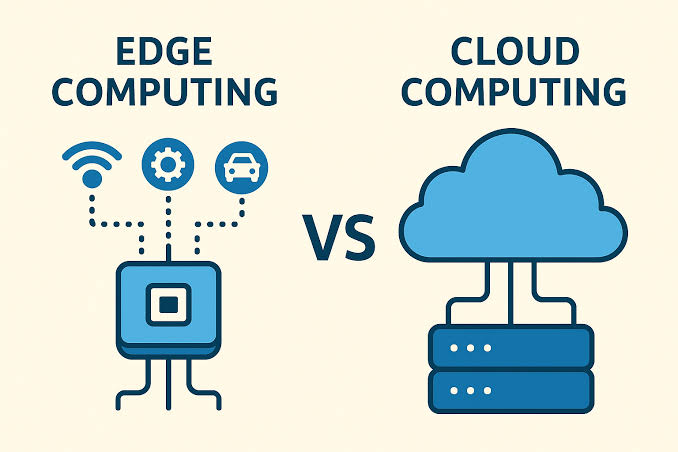
For most organizations, the answer is no — and that’s the most important point to take away. Edge hosting and cloud hosting are not really competitors so much as complements. The strongest architectures often use both together.
A common pattern is to keep the “heavy” parts of an application — the central database, the core business logic, large-scale processing — in the cloud, while pushing latency-sensitive tasks and content delivery to the edge. The edge handles fast responses, caching, and lightweight computation near the user, then reaches back to the cloud when it needs the full power of centralized infrastructure. This hybrid approach gives you the best of both worlds: the raw capacity and maturity of the cloud, plus the speed and responsiveness of the edge.
Rather than asking “edge or cloud?”, the more useful question is usually “which parts of my application belong at the edge, and which belong in the cloud?”
Conclusion
Cloud hosting and edge hosting solve different pieces of the same puzzle. Cloud hosting centralizes resources in powerful data centers, offering massive scale, flexibility, and a mature ecosystem — ideal for compute- and storage-intensive workloads. Edge hosting distributes infrastructure close to users, minimizing latency and enabling fast, real-time experiences across a global audience.
Neither is universally “better.” The right choice depends on your application’s needs, your users’ locations, and how sensitive your experience is to delay. And increasingly, the smartest strategy isn’t choosing one over the other, but combining them — letting the cloud do the heavy lifting while the edge delivers speed where it counts. Understanding how each model works is the first step to building an infrastructure that’s both powerful and responsive.
FAQ
Is edge hosting replacing cloud hosting?
No. Edge hosting complements cloud hosting rather than replacing it. Most modern setups use both — the cloud handles heavy computation and central storage, while the edge delivers low-latency responses and content close to users.
Is edge hosting faster than cloud hosting?
For a geographically spread-out audience, usually yes. Because edge servers sit physically closer to users, requests travel shorter distances, which reduces latency. Cloud hosting can be just as fast for users located near its data center region.
Which is more cost-effective, edge or cloud?
It depends on your workload and traffic. Edge hosting can lower bandwidth costs by processing requests locally, but it adds complexity. Cloud hosting offers transparent pay-as-you-go pricing but can incur higher data-transfer costs for global delivery.