
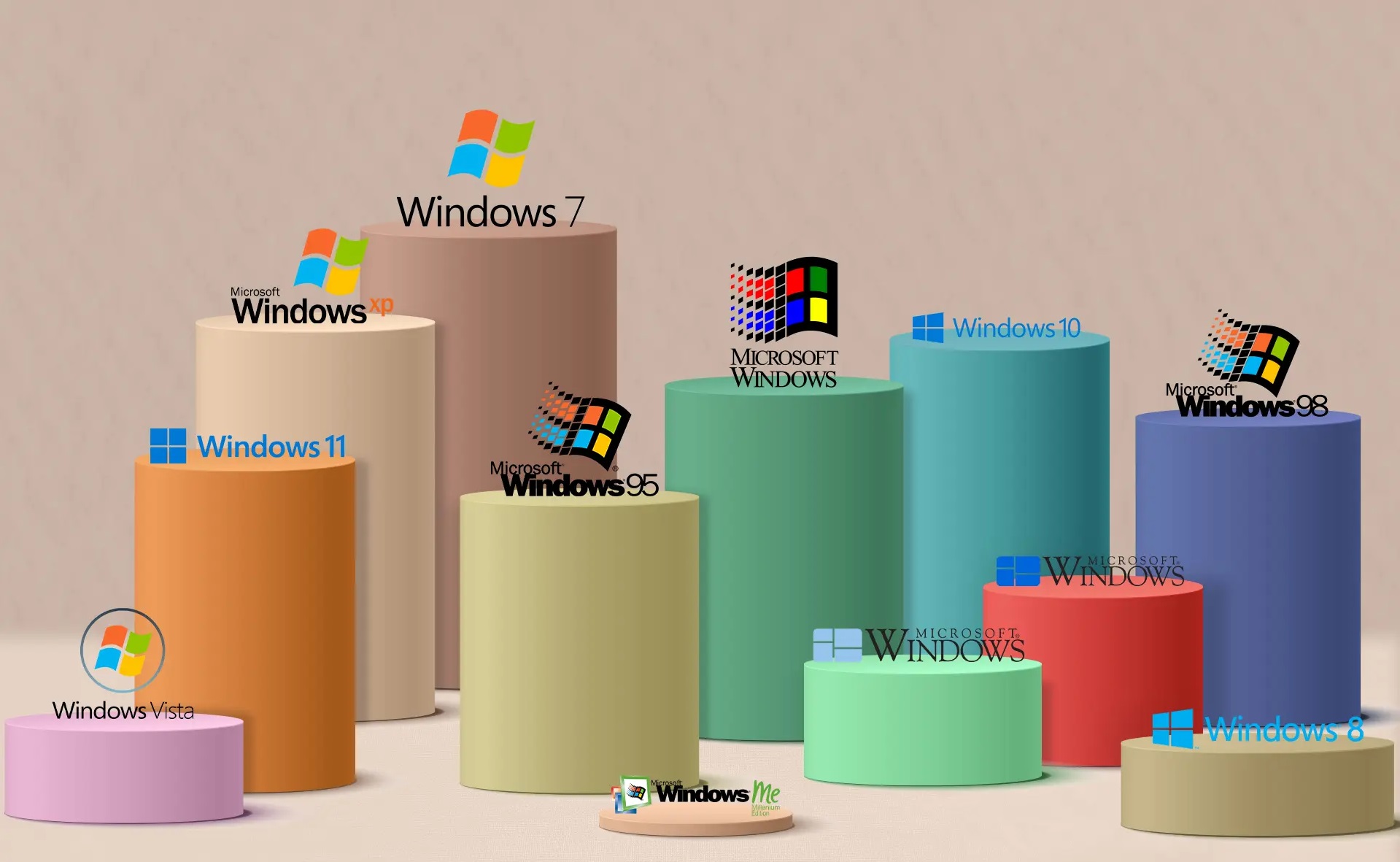
Ranking of All 12 Windows Versions From Worst to Best

From Windows 7 or 95 to Windows ME, Each Has Its Fans, But Which Version Of Windows Is The Most Powerful In The World?
In this article, we will rank all versions of Windows from worst to best, regardless of user age range, by examining Microsoft’s strengths and weaknesses, as well as its wins and failures.
12th Rank – Windows ME
The decision to assign the title of the worst version of the Windows operating system is not so easy. However, we chose this title for Windows ME. Microsoft’s Windows ME failed on almost all of its promised features despite its excellent initial targeting. This version of Windows only lasted a year, after which Microsoft introduced the lovely Windows XP.
Windows ME (Millennium Edition) was the last MS-DOS-based Windows operating system released on September 14, 2000, for home users; however, Microsoft limited users’ access to the DOS environment in Otorove and shortened system startup time.
This caused the user to benefit from the improvements in the Windows NT kernel (the main Windows kernel for workstations and network computers), which later became Windows XP. Formed main is deprived and does not have access to the capabilities of the DOS environment.
Windows ME is the worst version of Windows, often nicknamed “the wrong version of Windows.”
Windows ME was an interim version of Windows that came out between the release of Windows 98 and Windows XP, but it had poor driver support and was very unstable, so it could crash many times after booting up. There were countless reports of it crashing during installation, and features like System Restore, which Microsoft had touted many times, often failed to protect damaged systems.
Microsoft tried to take some innovative actions for Jeran Maffat: releasing automatic security updates, native ZIP support for compressing folders and intranet files, and producing a new Help and Support system to simplify the process, which had been troubled ever since the core of the operating system did not perform smoothly and correctly. Microsoft’s efforts were practical.
11th rank – Windows 8
The development of Windows 8 was considered essential for Microsoft, but it failed to gain much attention. This version of Windows was released on October 26, 2012, as a replacement for Windows 7. Microsoft’s goal in developing Windows 8 was to change the user interface for touch gadgets to meet tablet users’ needs, moving the start menu and presenting the start screen instead of the desktop environment, along with extensive changes and the combination of desktop and tablet user interface elements, can be identified as the most important reasons for Microsoft’s failure in presenting Windows 8.
Windows 8 was the first version of this operating system after Windows 95, which did not have a start menu and instead featured a new screen for touch devices. This screen, called Live Tiles, uses square or rectangular tiles to display tools and applications.
This dissatisfaction led Microsoft to release another version of the same Windows under the name Windows 8.1, in which the taskbar and Start menu were restored. Microsoft also tried to encourage gamers to stay on the platform by keeping DirectX11, but all these decisions were panaceas that did not work.
10th rank – Windows Vista
Perhaps most of you consider Windows Vista the theoretical version of this operating system, but its appearance ranks it tenth on your list. Inflows, Vista was released five years after the previous version, Windows XP, making it the longest time between the releases of the two versions of Windows.
Microsoft first called this version of Windows Longhorn, and after development and completion, it was finally released as Vista on January 30, 2007, on its official website.
The minimum hardware specifications announced when installing Windows Vista were compelling: WindWindows-only hired a 1 GHz processor, 1 GB of RAM, 15 GB of storage space, a graphics chip with DirectX 9 support, and 128 MB of VRAM to install. These specs don’t sound like much today, but 15 GB at the time was 10 times the storage required, and 1 GB was roughly 20 times the RAM needed to install Windows XP.
Windows Vista was incompatible with older drivers, and almost all companies were forced to release new drivers for their programs, making the Vista version of Windows a nightmare for programmers. In addition, the widgets on this Windows were not welcomed as they should have been, and the new pop-ups did not find favor.
The only positive point of Windows Vista is the semi-transparent Aero design language. Compared to the Windows XP design, Aero was more modern, featuring a transparent glass theme. This design was later used in Windows 7, and even Apple was inspired to design the Leopard Mac operating system.
The Aero design language can be considered an upgrade path for future user interface design. However, Windows Vista is regarded as one of the worst versions of the Windows operating system, which was too new for its time, and few people have good memories of it.
Ninth rank – Windows 1.0
Windows 1.0 was the first version of the Windows operating system, released on November 20, 1985. Maybe this version deserved to reach a higher position, but the fact is that Windows 1.0 was not an independent operating system at all. Windows 1.0 was a graphical environment that ran on the MS-DOS operating system.
Windows 1.0 can be seen as a great start for Microsoft’s new direction, which was supported for 17 years.
The popularity of graphical user interfaces led Microsoft to introduce Windows 1.0 as a graphical user interface based on MS-DOS.
Windows 1.0 required two floppies to run in an MS-DOS environment and supported CGA, Hercules, and EGA graphics cards. Some classic Windows programs, such as Paint, Calculator, and Notepad, were developed for this version of Windows, and it was possible to run MS-DOS programs, etc. However, a limited number of these programs ran well.
8th rank – Windows 2.0
Windows 2.0, like Windows 1.0, was a 16-bit graphical environment released on December 9, 1987, as a replacement for Windows 1.0.
This version of Windows did not succeed like Windows 3.0 or 3.1 and was still not competitive with the Macintosh operating system. Still, it comes with essential features compared to Windows 1.0. In this version, Microsoft added the ability to overlap and resize windows and to support 16-color VGA graphics and desktop icons; instead of terms like “Iconize” and “Zoom” in Windows 1.0, the terms Maximize and Minimize are used.
The most important strength of Windows 2.0 was not the operating system itself but the programs that came with it. Windows 2.0 was packed with practical applications, from calculators and calendars to Microsoft Word and Excel. Microsoft supported Windows 2.0 for 14 years until December 31, 2001.
Seventh rank – Windows 95
Windows 95 was the operating system that determined the appearance of Windows for decades to come. In this version, Microsoft introduced the iconic Start menu and placed applications in submenus to make the interface easier to navigate and organize.
Windows 95 was a huge change compared to the MS-DOS environment, and its graphical interface opened new doors for game and application developers.
Microsoft unveiled Windows 95 on August 24, 1995, and for the first time, it surpassed the Macintosh operating system in terms of performance.
Windows 95 had many bugs fixed with the release of Windows 98. Still, this version introduced many of today’s desktop standards and was Microsoft’s most popular operating system for a decade.
Windows 95 had about 60% of the computer market until the late 1990s. The most prominent features of Windows 95 used today are the taskbar, improved file management, more keyboard shortcuts, and a more modern desktop.
Sixth rank – Windows 98
Windows 98 was released on June 25, 1998, as a replacement for Windows 95 and fixed bugs. This version of Windows was the first operating system to support USB and DVD and to include a standalone browser (Internet Explorer).
Windows 98 was well-received after its release. Its second version, Windows 8 SE (abbreviated as Second Edition), became more popular a year later with many bug fixes and user interface optimizations.
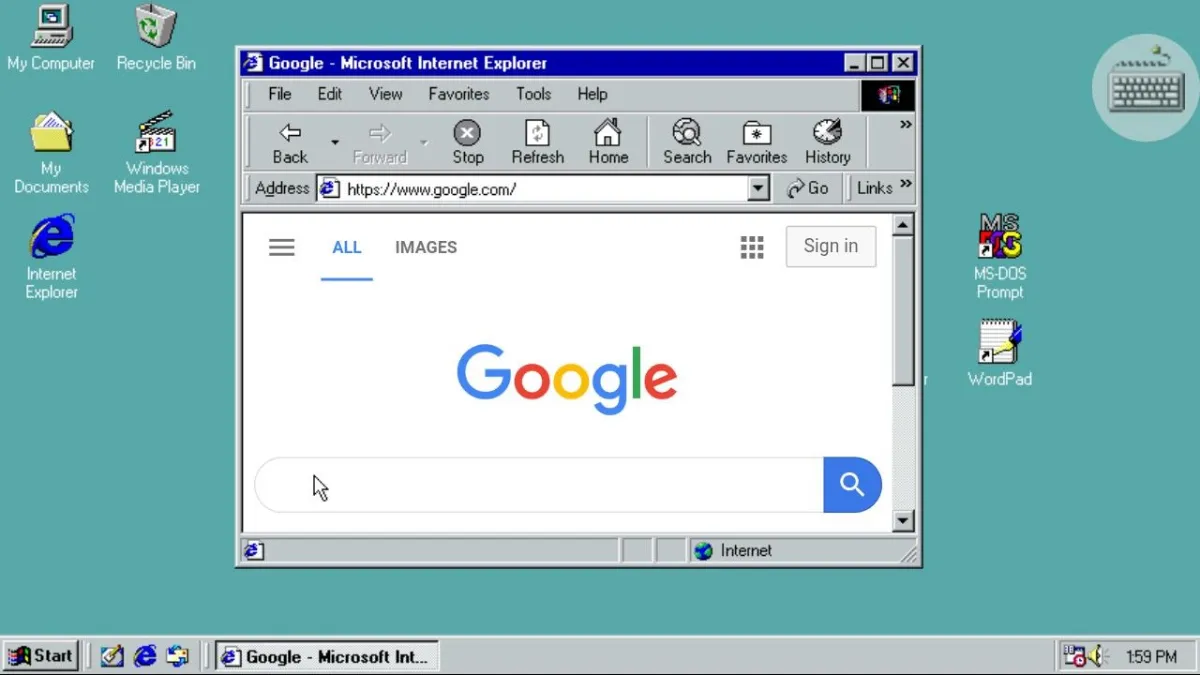
Windows 98 was the first Windows version to introduce a clean Internet Explorer (4.0) and the ability to share an Internet connection. Despite its dependence on the MS-DOS kernel, it was a step toward eliminating the Command Prompt’s limitations.
In addition, Windows 98 hosts some of the most well-known games of the decade; Games like Age of Empires, Half-Life, and Unreal made this version of Windows the top desktop gaming platform.
At the time, users were a little upset about selling Windows 98 as an independent operating system, since they considered it an improved version of Windows 95. However, Microsmanifolds sold millions of copies of this version and finally stopped supporting it after eight years.
Fifth place – Windows 11
Windows 10 was supposed to be the “last version of Windows” b” in June 2021; Microsoft officially unveiled a new version called Windows 11 as an evolved version of the previous Windows.
It may be too early to judge the latest version of Windows, but it already has many fans for its simplicity and high performance. The bold changes in Windows 11, such as the redesign of the Start menu and taskbar, might have caused this version of Windows to suffer the same fate as Windows 8, but that did not happen.
Windows 11, despite all the many innovations, can be considered a very significant version of Windows 10, in which some of the old interfaces of Windows 7 have been removed, and it offers a more consistent and engaging user experience than Windows 11; you can run multiple versions of your desktop simultaneously and switch between them for more productivity.
In addition, Microsoft supports Android apps in this version of Windows, and it is possible to download them from other stores, such as Epic Games.
Although gamers are used to Windows 10, Windows 11 is trying to tempt them with some features such as more optimization for running games in windowed mode, suspend ort for AutoHDR, and Diredirect storage specifications required to install Windows 11 are almost the same as Windows 10, except that Windows 11 only supports 64-bit systems; Windows 11 currently requires at least 4GB of RAM and 64GB of storage.
It may take years for Windows 11 to replace Windows 10, but if the adoption rate continues to rise, we can hope that this version of Windows will one day be recognized as the best version of Microsoft Windows. Of course, provided that Microsoft does not release a new version of Windows until then.
Fourth place – Windows 3.1
Microsoft introduced Windows 3.1 in April 1992 to compete with Apple, two years after the release of Windows 3.0, by fixing graphics problems and disbanding laying fonts and multimedia files.
This version attracted the attention of many people and made companies show interest in using Windows in addition to the regular version.
In this version of Windows, Microsoft has improved the fonts for creating content and unveiled the shortcuts Ctrl+C (for copying), Ctrl+X (for cutting), and Ctrl+V (for pasting) for the first time.
In addition, Windows 3.1 included tools such as Screen Saver and Media Player, and the two games Solitaire and Minesweeper were installed by default.
Microsoft sold more than 3 million copies of Windows 3.1 in the first three months of its release. This success paved the way for the introduction of Windows 95. Three years later, Microsoft officially supported this version of Windows 9 eyeliners.
Third place – Windows 10
Windows 10 was introduced on September 30, 2014. This version of Windows is considered the “most comprehensive software platform” available on any device, from smartphones to tablets and computers, in an integrated manner. According to Microsoft, Windows 10 was supposed to be the last version of the Windows operating system.
This version of Windows is available in different models, such as Home Edition for home users, Pro Edition for more advanced users, Enterprise Edition for businesses, Gaming Edition, and a model compatible with phones.
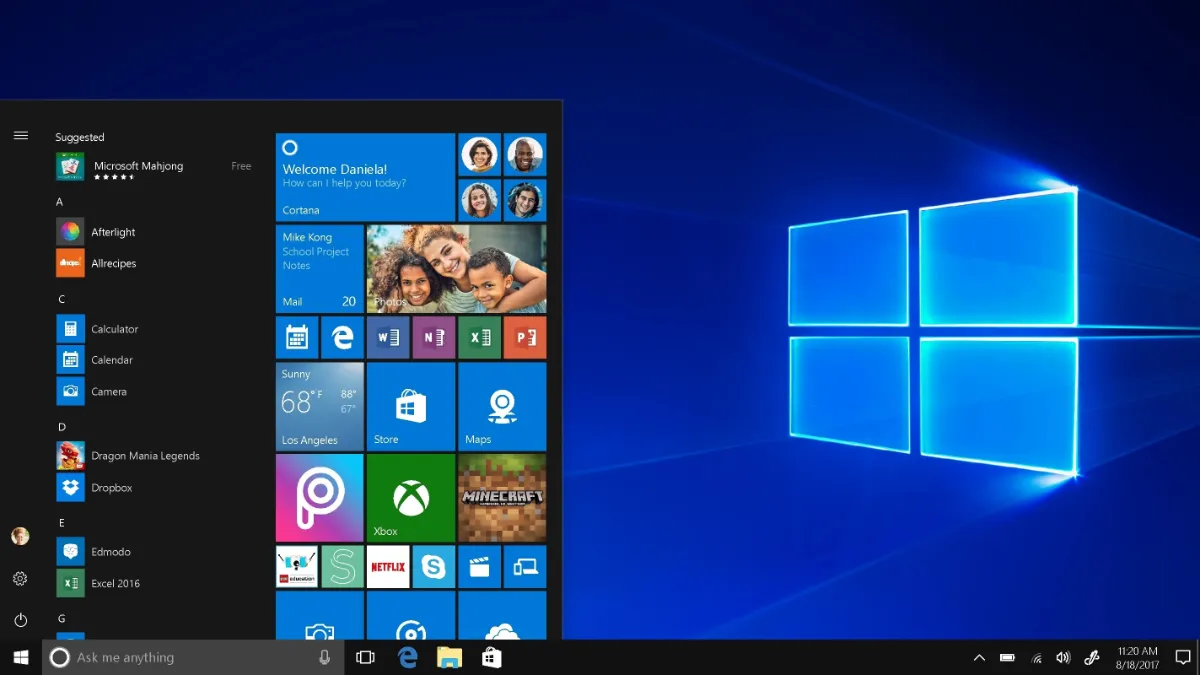
All these models were equipped with a virtual desktop, Windows Defender to secure the user environment, Windows Hello security system, and Microsoft’s virtual assistant (Cortana).
Microsoft introduced Windows 10 after the failure of Windows 8. After the wave of user dissatisfaction, this version of Windows made a gentle transition to restore the pleasant experience of working with Windows 7.
Second place – Windows XP
Windows XP is one of the most popular versions of Windows, introduced on October 25, 2001, under the code name “Whistler.” While developing this version of Windows, many Microsoft employees worked at Thistle Resort Canada.
Windows XP was developed on the core of Windows NT and 2000 and was initially released for home and professional users. This version of Windows also supported the language. With this version of Windows, Microsoft introduced millions of people to the World Wide Web and enabled communication among thousands of popular chat programs.
Windows XP has the most iconic appearance among the versions of the Windows operating system, from the green start button to the Rolling Hills wallpaper that reminds us all of Windows XP. In addition, this version of Windows included default programs such as Windows Media Player, Windows Movie Maker, and Care.
Windows XP only supported 32-bit processors and, therefore, could not use more than 4 GB of system RAM. When 64-bit processors were released, the version of Windows was limited.
Although Windows XP’s life was only 13 years, in January 2008, Microsoft stopped allowing it to be installed on new computers, yet many users still use it.
First place – Windows 7
Windows 7 was introduced on October 22, 2009, for personal computers. This version was the seventh generation of Windows operating systems that Microsoft supported for 11 years.
Some believe that Windows 7 is a modified version of Windows Vista, developed to address its problems. However, the seventh version of Windows was not merely a simple modification; Windows 7 was fast and responsive and offered significant visual improvements over previous versions of Windows.
It was highly compatible with older hardware and software, and it uses features that are still considered among the core foundations of Windows.
Some of these features include improved touch interaction and handwriting recognition, support for Virtual Hard Disk, improved performance on multi-core processors, improved operating system kernel, and high-speed installation and setup.
In addition to the more extraordinary features of Windows 7, drag-and-drop support was added to Windows Media Player in this version, and the calculator’s unit conversion was improved. These features were not seen in previous versions.

Windows 7 required 1GB of RAM to install and was more expensive than previous versions; however, Microsoft still supported it and modern hardware, so many users would probably still be using it today.
What do you think about different versions of Windows? Which version is more beneficial to you? How do you rate these 12 versions?
FAQ
Which Windows version is considered the worst?
Windows ME is often rated the lowest due to instability and frequent crashes.
Which Windows versions are most popular or successful?
Windows 7, XP, and 10 are widely regarded as the best for stability, features, and usability.
Does newer Windows mean better performance?
Not always; some older versions are preferred for reliability and compatibility.