
What Is Error 500: Internal Server Error Explained

One of these errors is error 500, which includes a wide range of server-side errors. This error is included in the general errors category and includes issues that are not included in the existing error codes.
In this article, we intend to first tell you what error 500 is, and then we will discuss important issues, such as the causes of this error and ways to fix it. Stay with us.
What is error 500?
Not all 500 errors are related to your computer, browser, or even your Internet connection. They cover a wide range of errors created on the server side, such as error 502 and other errors. And if you are not the owner of that site, you can do nothing.
Web servers use status codes defined for them to tell the user’s browser whether the request they sent was successful or not. If the response received contains code 200, the browser will know that everything went well.
Of course, we must mention the important point that the user will never see the 200 code. Instead, the content of the desired page will be shown. On the other hand, we have family codes 400 and 500, which are completely different. First-series errors include client-side errors, and second-series errors include errors generated by the web server.
Error 500 is a collective status code for server errors. Therefore, at first glance, it is impossible to determine exactly where this error is related. Users can only be sure that the server has reported an unexpected error when they see it.
This error can appear on any site you try to open in your browser. Since it is common, it appears in different ways, as shown below.
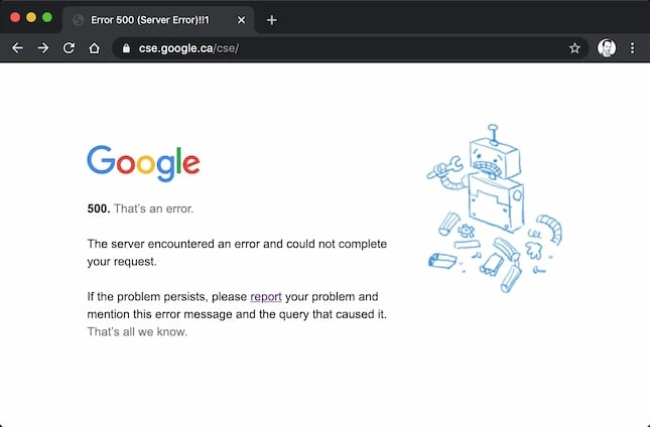
500 error types:
- Internal server error
- The page isn’t working
- 500 Internal Server Error
- 500 Server Error
- 500 That’s an error
- HTTP 500.0 – Internal Server Error
- Error 500
- Error code: 500
- The server returned a 500 Internal Server Error
- Temporary Error (500)
What are the reasons for showing error 500?
A 500 server error may occur when the web server has processed the request. Error 500 includes all unexpected events that happened simultaneously. If this error occurs, the website will not load.
Error 500 mostly means creating a series of problems in the web server configuration, which you can see in the following section:
Htaccess file. Broken or lost
htaccess is a file with important instructions related to the server. These instructions tell your software to enable or disable certain functions. These guidelines may help you password-protect a directory or restrict user access.
Several reasons may cause an Htaccess file to become corrupted. One of the main reasons can be the installation of plugins, file configuration, or even performing a series of tasks on the server.
Errors related to permission
Permission errors are mostly related to protecting files. Most license errors can be related to bugs, user errors, or even network problems. Usually, this error means that the user is not allowed to perform the action they are taking.
Installing faulty third-party plugins or themes
Some users may add a third-party theme or plugin to their website to enhance the features or performance of their server or even their site.
These plugins can be a great option for your site, but some will probably negatively impact performance and functionality.
Individuals or small groups often create these plugins and themes. Once installed on your site, they can present challenges. Some of them are in the early stages of development, and the teams that built them need to spend more time before they can provide you with a complete product.
The occurrence of an error related to the memory limit in PHP
If you’re not familiar with PHP, it is a programming language used to build the site’s backend. PHP is useful for managing content, databases, and the like.
Each PHP process consumes memory, and your host has a memory limit. If a website exceeds the PHP memory limit, it may return a 500 error. Hosting company ( WordPress hosting price inquiry). To solve these conditions, it is necessary to contact your
What is the method to fix error 500?
Unlike other server-side errors like Error 502, Error 500 doesn’t immediately tell us where the problem is, so you can’t fix it quickly. If this error exists on your site for a long time, it will negatively impact your site’s SEO.
There are two general ways to fix this error
You are about to load a page with error 500:
- Refresh the page.
- Wait a short time and enter the site again.
- Delete your browser cookies.
- Enter the site address in the Down for Everyone or Just Me tool to determine whether the problem is on your end or the site is unavailable.
Error 500 has occurred on your website:
- Check or disable any installed plugins or themes.
- Use a plugin like WP Debugging to identify the problem.
- Make sure your site’s PHP settings are configured correctly.
- htaccess file code. Check your site.
- Make sure your website software is installed correctly.
Conclusion
So far in this article from Iran, you have learned about error 500 and the factors that can cause it. You have also found out what you need to do to fix it. If you cannot resolve the issue by completing the tasks mentioned, it is better to contact the site’s support so they can better assist you.
FAQ
What does Error 500 mean?
Error 500 means the server encountered an unexpected condition that prevented it from fulfilling the request.
What typically causes a 500 Internal Server Error?
Causes include server misconfigurations, faulty code, exhausted resources, or permission issues.
How can a 500 error be fixed?
Restarting the server, checking error logs, correcting code issues, or reviewing server settings can help resolve it.