
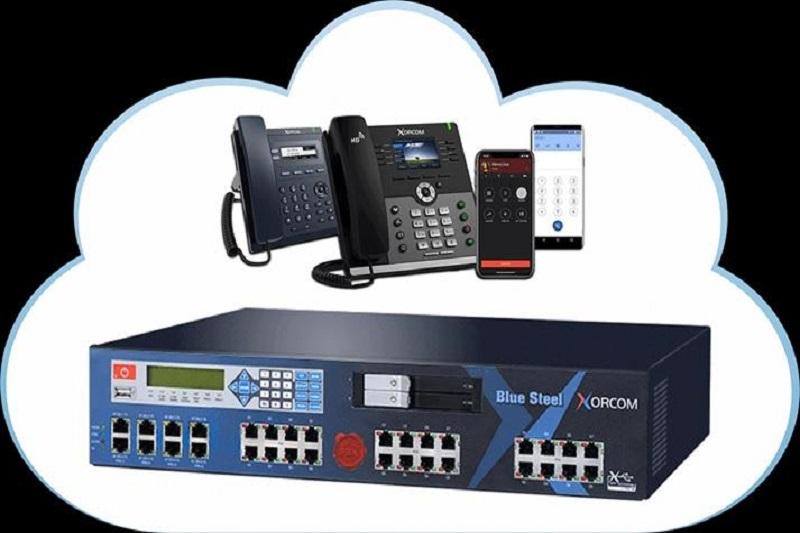
Capabilities Provided by Central Systems in an IP PBX Network for Companies

IP PBX Systems Can Provide Not Only Basic And Traditional PBX Features (Call Holding, Call Forwarding, Call Waiting, Video Calling, And The Like) But Also More Advanced Features Such As Voicemail, Music-On-Hold, Automatic Accompaniment, And The Like.
These systems can provide a complete set of capabilities required by businesses whose infrastructure is based on SME/SMB technology and can be easily updated. Small and medium-sized companies can use centralized systems to enhance video calling and tailor it to their needs.
Telephones connected to the network (Internet IP telephony), also known as VoIP phones, can direct phone calls over the Internet and, in simpler terms, convert voice signals into Internet data packets.
It is necessary to explain that traditional telephone headsets can make Internet telephone calls via analog trunk gateways, personal computers running dedicated software, or networked telephones.
Companies, because networked systems establish powerful multimedia connections, significantly reduce costs and are easy to use. The possibility of developing and integrating new services based on these central systems is very welcome.
Networked telephones provide various services over the Internet and the Public Switched Telephone Network (PSTN) infrastructure.
However, they all offer essential features such as call forwarding, call holding, and voicemail.
Most of these systems are fully automated and can route incoming calls to different departments within a company. These devices can use a single phone line and significantly reduce Internet phone service costs.
Typically, these products can support over 100 subscriptions and 30 simultaneous calls, perform best for call centers, and can be used as PBX, GATEWAY, and MEDIA/FEATURE servers.
Users can configure PBX phone functionality through the web configuration tool.
In addition, the network administrator can define a specific profile for each user based on their role.
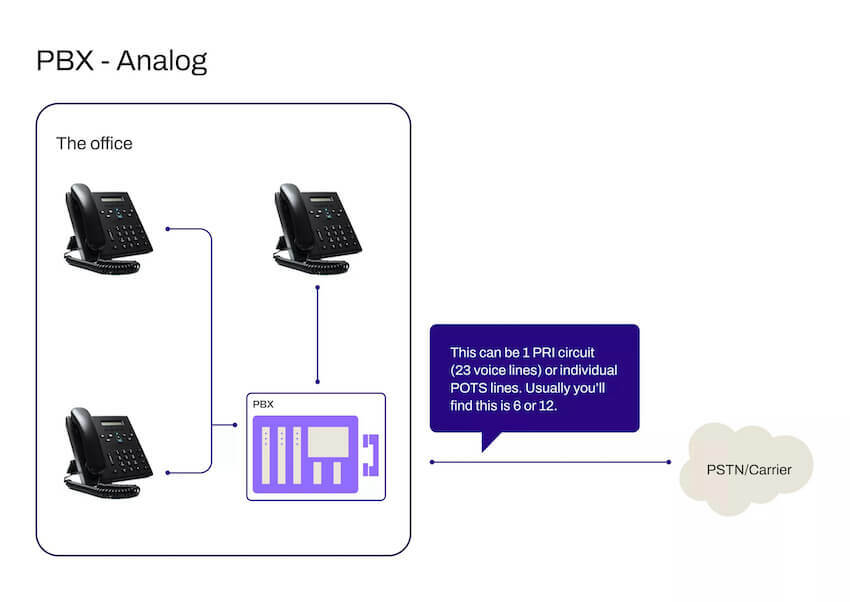
What features should a central system be equipped with?
Usually, a central network system should have the following technical capabilities:
- Network features include DDNS Client, DHCP Server, IPv4/IPv6/IEEE802.1Q, IP Assignment (PPPoE/DHCP/Static), SNMP v1/v2, TR-069, Static Route Table, Troubleshooting (Ping/Traceroute), VPN Client. (L2TP/PPTP/OpenVPN/N2N/IPSec) And VPN Server (L2TP/PPTP/OpenVPN/IPSec) support.
- Also, in terms of hardware, it must be equipped with a reset button, Ethernet interfaces, a console interface, a USB interface, a dual-core processor running at 1 GHz, 1 GB of SDRAM, support for memory cards, etc.
- The PBX features of a central system should include the ability to create a blocklist, Busy Lamp Field, Call Detailed Record, Conference Room, Call Monitoring, Direct Inward Dialing Number, Direct Inward System Access, Distinctive Ringtone DND, Dialed Number Identification Service, Feature Codes FOP, Status Monitoring, Interactive Voice Responses, Mobility Extension, LDAP Server, Record File Download, SIP Register with, UDP/TCP/TLS, SIP Trunk, Secure Real-time Transport Protocol, Time Based Rule, WebRTC/ Web Dial, Voicemail & Voicemail to Email, etc. mentioned.
- In connection with the protocols and encodings supported by such systems, support for the audio coding system G.722/G.711-Ulaw/G.711-Alaw/G.726/G.729/GSM/SPEEX and the video coding system H .261/H.263/H.263+/H.264 and SIP (RFC3261)/IAX2 and RFC2833/SIP INFO/In-Band protocols.
The key point to note about these systems is that some models offer not only the essential functions of a traditional PBX (call holding, call forwarding, call waiting, video calling, etc.) but also advanced features such as a panel.
The operator also has voicemail, music on hold, and auto attendant (auto attendant is a programming command with different, manageable menus that act based on user behavior, for example, connecting a specific user to a particular extension or a user clicks the other to the fax).
- It is also easy to manage, maintain, and update in small and medium-sized organizations. Small and medium-sized companies can set up their desired telephone system to improve efficiency.
- The most popular reasons for using a networked telephone system are cost savings, ease of development, and integration with new techniques and technologies. A networked telephone system integrates Internet-based services and Public Switched Telephone Network (PSTN) infrastructure. The network telephone system, or VoIP, transmits telephone call data over the Internet as standard Internet data packets. For an Internet phone call, you can use regular phones with a gateway (Analog Trunk) that connects the phone line to the Internet, software installed on a computer, or IP phones.
- Usually, these provide essential functions such as call transfer, call holding, following my role, and using a voicemail system. The Fallow Me feature ensures that if someone in the company misses a call and moves to a different office, the operator can program the system so that the first call goes to office 1, then to office 2. Then connect to Office 3 and any location where that person is likely to be present. The automatic assistant and target groups connect incoming calls to the correct destination.
- Using an external gateway, you can transfer standard phone lines to these devices and use cost-effective internet phone services.
Scalability and easy extensibility
You can set up an internal system anywhere you have internet access. Typically, these systems support up to 100 internal subscriptions. Also, by adding a few units, you can increase the number of available extensions, allowing departments such as sales or support to access more lines.
Easy web-based configuration
The user can configure the PBX’s unique features through a web-based dashboard. In this case, network administrators can define department-specific profiles and user profiles for each unit, based on their needs, so that each user can configure their silhouette through the web interface.
last word
In general, central systems under the IP PBX network to optimally use the network telephone line and eliminate the cost of wiring, eliminate the cost of intercity and international calls by providing communications through the ability to make internal calls using IP PBX, the possibility of creating a single phone call They are operated through a contact number regardless of the geographical environment using IP PBX and wireless solutions for large and industrial settings.
FAQ
What core capabilities does an IP PBX central system provide?
It delivers business telephony functions like call forwarding, call holding, call waiting, voicemail, auto‑attendant, conferencing, and extension management.
How do IP PBX central systems support internet telephony?
They convert voice into internet data packets (VoIP), route calls over IP networks, support SIP trunking, and reduce telephony costs compared to traditional PSTN.
Can companies customize and manage IP PBX features?
Yes; administrators can configure user profiles, call rules, and advanced features via web‑based dashboards, supporting scalability and tailored communication workflows.