

Big Data as a Service (BDaaS): Cloud-Powered Data Analytics Made Easy

The above approach allows companies to remove their intellectual property from the information. An initial investment in storage space is required to manage large volumes of data, including big data.
In this context, an extraordinary computing paradigm called “Big Data as a Service” (BDaaS) has emerged, enabling organizations to focus on a broader, more comprehensive view.
With the BDaaS storage model, data is accurately available to organizations. In this case, organizers only need to rent cloud-based space and analytics engines.
As modernization and digital transformation are prevalent in today’s technology landscape, big data is no longer a novel or unfamiliar concept. Interestingly, the BDaaS paradigm allows organizations to access the services needed to process this data directly.
However, it is essential to note that BDaaS is designed as a multidimensional data solution that enables consistent processing of structured, semi-structured, and unstructured data.
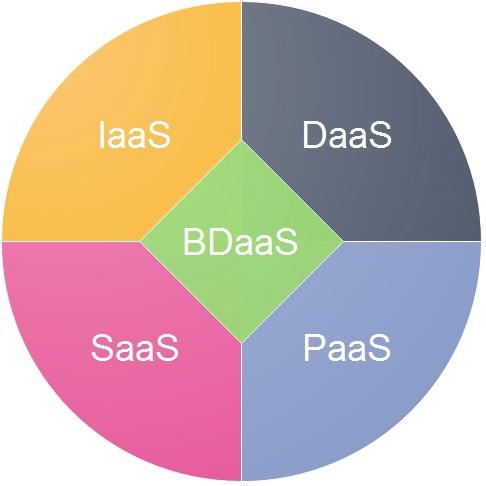
Analyze
Analytics is another BDaaS service. Given the vast amount of unstructured data generated daily, Big Data as a Service enables organizations to free up critical resources and focus on creating better value for audiences, with more resources and bandwidth for assigned services that customers use.
The analysis is essential for organizations because it allows them to focus on maintaining and managing data on a comprehensive platform and access the required data in any situation. Of course, some of the services this paradigm provides are similar to other computing paradigms, the most important of which are infrastructure as a service (IaaS) and software as a service (SaaS). Both paradigms provide a practical option for working with Big Data.
Organizations can now perform analysis on the vast amount of data that has been collected. The above approach provides better results from the point of view of sales and marketing and brings more business profitability. Any business, from small to large enterprises, can take advantage of the potential benefits of BDaaS.
Processing
One of the most prominent problems organizations face with extensive data analysis is the processing power and storage space they need, and the cost is increasing. Unfortunately, in most cases, access to such services is costly, and in practice, they do not provide the necessary computing power for organizations.
By solving the above problems, BDaaS not only provides the appropriate processing power to organizations but also provides access to a network with high bandwidth, in which the process of sending and receiving data is high, and all processing is done on the service provider’s servers. In this case, organizations do not incur any costs for purchasing and maintaining equipment to access more storage space and the required processing power. Of course, if we ignore the issue of hiring specialists in this field.
As a public, hybrid clouds have evolved over the years, providing an inexpensive solution for rapidly delivering processes, storage, and data collection. Companies can now expand their data strategy using BDaaS. The mobility in this field is ideal.
To be economical
BDaaS is cost-effective by saving you the cost of installing an in-house system. In addition, having a simple and efficient design, the concepts being best abstracted, and the user having access to everything through a simple and convenient central dashboard are other potential benefits of BDaaS. The above approach allows companies to access data at any time. So in the BDaaS model, there is a win-win approach for both sides of the story.
Global Big Data as a Service (BDaaS) Marketplace
From a vertical economy perspective, the big data as a service (BDaaS) market is expected to deliver a strong compound annual growth rate (CAGR) as industry digitization and automation in data-intensive manufacturing reach their peak. Therefore, to gain valuable insights from this massive data, BDaaS solutions are expected to enter the production sector shortly.
Global Big Data as a Service (BDaaS) Market by Region
North America is projected to account for the largest share of the global big data market, as it did in 2020. Several factors drive BDaaS growth faster in some countries, including artificial intelligence (AI), Internet of Things (IoT), machine learning (ML), and cloud services across various vertical industries.
Some of the important players that have a significant impact on the growth of the big data market on a global scale are IBM Corporation, Microsoft Corporation, Cazena, Arcadia Data, Amazon Web Services, New Relic, VMware, Inc, Oracle Corporation, Google Inc, SAP SE., DataTorrent, DataHero, Teradata Corporation, SAS Institute, Hewlett-Packard, Tableau Software and Splunk and similar examples.
Last word
The global Big Data as a Service (BDaaS) market reached USD 12.8 billion in 2020 and is expected to grow at a CAGR of 32.7% through 2028.
Big Data as a Service (BDaaS) provides third-party analytics solutions that enable organizations to derive accurate insights from vast data volumes and gain a critical competitive advantage in their target market. Big Data as a Service (BDaaS) combines cloud computing platforms and big data technologies to help users reduce the time and cost of deploying big data projects.
Big data enables companies to manage big data on cloud platforms for easy access. BDaaS solutions use statistical tools that will allow companies to analyze complex datasets efficiently and accurately, producing reliable results.
FAQ
What does BDaaS mean?
BDaaS is a cloud service that provides businesses with tools and platforms to handle big data analytics and management without needing on-premises infrastructure.
How does BDaaS benefit organizations?
It reduces infrastructure costs, simplifies data processing, and offers scalability and flexibility for handling structured and unstructured data.
Why do companies use BDaaS instead of building their own systems?
Organizations choose BDaaS to avoid high upfront costs, leverage expert tools, and accelerate insights from data without maintaining complex internal systems.