


With the rapid growth of information technology, the optimal use of hardware resources has become one of the most important concerns for network administrators, companies, and hosting service providers. Purchasing multiple physical servers to run different services is not only expensive but also involves complex management. For this reason, virtualization technology has become one of the main pillars of modern infrastructure.
Among virtualization software, Proxmox Virtual Environment, or Proxmox VE for short, is one of the most popular and powerful open source solutions. This platform provides users with various features such as creating virtual machines, managing containers, backing up, clustering, and online migration of virtual machines.
In this article, you will learn in detail about Proxmox, how it works, its benefits, features, applications, and its differences from other virtualization platforms.
What is Proxmox?
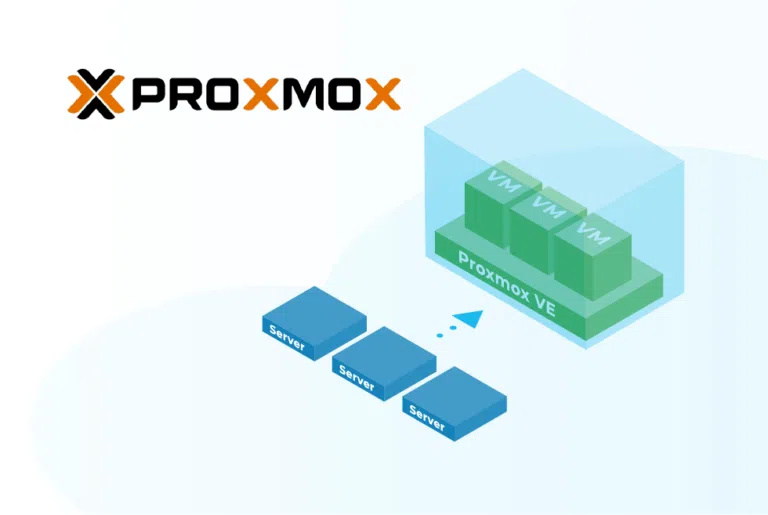

Proxmox Virtual Environment (Proxmox VE) is an open-source operating system and platform for server virtualization management, built on the Debian Linux operating system.
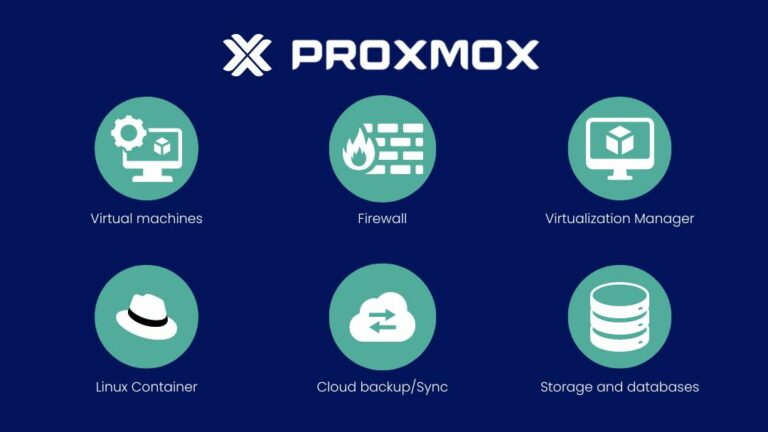
This software allows server administrators to create and manage multiple virtual machines (VMs) and Linux containers (LXC Containers) on a physical server.
One of the most important features of Proxmox is that it supports two virtualization technologies simultaneously:
- KVM for virtual machines
- LXC for Linux containers
That is why both technologies can be used on the same server, depending on the project’s needs.
How does Proxmox work?
After installing Proxmox on the server, all hardware resources, such as the processor, RAM, storage space, and network card, are managed by Proxmox.
Through the web panel, the server administrator can:
- Create virtual machines.
- Create containers.
- Manage the resources of each machine.
- Take a snapshot.
- Create a backup.
- Turn on, shut down, or restart machines.
- Manage the network and storage.
All these operations can be performed without installing additional software, only through a browser.
Proxmox main components
1. KVM
KVM technology is used to run virtual machines.
Each virtual machine has its own operating system, hard drive, RAM, and a virtual dedicated processor, and acts like a real server.
Using KVM, you can install various operating systems, such as:
- Windows Server
- Ubuntu
- Debian
- AlmaLinux
- Rocky Linux
- CentOS
- FreeBSD
2. LXC
In addition to virtual machines, Proxmox also supports LXC.
Containers are much lighter than virtual machines because they use the host Linux kernel.
For this reason:
- They run faster.
- They consume fewer resources.
- More of them can be run on a single server.
LXC is a good choice for running Linux services, web servers, and development environments.

Web-based management panel
One of the most popular features of Proxmox is its web-based user interface.
The server administrator can manage all virtual machines and containers without needing to run complex Linux commands.
In this panel, you can also view CPU, memory, disk, and network usage.
Snapshot
Using Snapshot, the current state of a virtual machine can be saved.
In case of a problem, the machine can be restored to the previous state with just a few clicks.
This feature is very useful when installing software, updating the operating system or making important changes.
Backup
Proxmox has a built-in backup system.
You can back up virtual machines and containers on a scheduled basis.
In the event of a system failure or data deletion, recovery will only take a few minutes.
Live Migration
One of Proxmox’s professional features is the ability to move a virtual machine from one server to another without shutting it down.
This feature is very important for data centers and enterprise infrastructures because it reduces service downtime.
Cluster
Multiple Proxmox servers can be managed as a single cluster.
In this case, all servers are managed through a single management panel.
It is also possible to move virtual machines between servers.
High Availability
If multiple servers are used, the High Availability feature allows virtual machines to automatically run on another server when one server becomes unavailable.
This feature plays an important role in improving service stability.
Advantages of using Proxmox
Proxmox has several advantages that have made it popular.
The most important advantages are:
- Open source and free
- Easy installation
- Web-based user interface
- Support for KVM and LXC
- Simple management of virtual machines
- Support for Snapshot
- Internal backup system
- Cluster capability
- Live Migration
- High Availability
- Support for storage types
- High security
- Regular updates
- Large user community
Disadvantages of Proxmox
Along with the advantages, Proxmox also has some limitations.
Some of them are:
- Requires familiarity with Linux for professional use.
- Some enterprise features receive official support along with a commercial subscription.
- Managing complex storage requires specialized knowledge.
- In very large environments, infrastructure design is crucial.
Proxmox Applications
Today, Proxmox is used in many organizations and data centers.
Some of its applications include:
Virtual Server Provisioning
Many hosting companies use Proxmox to provide VPS.
Enterprise Server Virtualization
Companies can run multiple servers on a single piece of hardware, reducing equipment purchase costs.
Educational Labs
Students and network administrators can run and test multiple operating systems on one server.
Software Development
Programmers can create different development environments in isolation.
Cloud Computing
Many private Cloud services are designed based on Proxmox.

Almost all common operating systems can be installed on Proxmox.
Including:
- Windows Server
- Windows 10
- Windows 11
- Ubuntu
- Debian
- AlmaLinux
- Rocky Linux
- CentOS
- Fedora
- FreeBSD
- pfSense
- MikroTik CHR
The difference between Proxmox and VMware ESXi
| Feature | Proxmox | VMware ESXi |
| Open Source | Yes | No |
| Cost | Free | Primarily Commercial |
| Web-based Management Panel | Available | Available |
| KVM Support | Yes | No |
| LXC Support | Yes | No |
| Snapshot Support | Available | Available |
| Live Migration | Supported | Supported |
| Cluster Support | Supported | Supported |
| Built-in Backup | Available | More Limited |
Proxmox or Hyper-V?
Hyper-V is a Microsoft product and is better suited to Windows Server-based environments.
In contrast, Proxmox is more flexible and is ideal for running multiple operating systems and managing containers.
If your infrastructure is primarily Linux-based or you need features such as LXC, clustering, and open-source tools, Proxmox is usually a better choice.
Is Proxmox suitable for businesses?
Yes. Proxmox is suitable for both home and lab users, as well as for organizations and data centers.
This platform is used by many cloud and hosting companies due to its extensive features, low cost, high security, and scalability.
However, in sensitive and enterprise environments, it is very important to design the infrastructure correctly, select the right hardware, and plan for backups and redundancy.
Summary
Proxmox VE is one of the most powerful open-source platforms for server virtualization, offering professional features such as KVM-based virtual machine management, LXC containers, Snapshots, Backups, Clustering, Live Migration, and High Availability in a unified environment.
If you plan to run multiple operating systems on a single server, create a virtual infrastructure or have an environment suitable for development, testing, or providing cloud services, Proxmox can be a reliable and cost-effective option. For this reason, this platform is today one of the most popular choices among system administrators, hosting companies, and organizations looking for a professional virtualization solution.
FAQ
What is Proxmox VE?
Proxmox VE is an open-source virtualization platform based on Debian Linux that allows you to manage virtual machines and Linux containers from a single web interface.
What is the difference between Proxmox and VMware ESXi?
Proxmox is open source, supports both KVM virtual machines and LXC containers, and includes many built-in management features, while VMware ESXi is a proprietary virtualization platform primarily designed for enterprise environments.
Is Proxmox suitable for production environments?
Yes. Proxmox is widely used by businesses, hosting providers, and data centers for production workloads thanks to its stability, clustering, live migration, backup, and high availability features.