

Which Programming Languages Are Best for Building Android Apps — A Developer’s Guide

It is possible to run Android applications on multiple devices, including Windows 11, so if you invest billions in developing this ecosystem, you will not lose. What language works best for building Android apps?
Android has been widely used in various devices for over a decade, and multiple developers have profited from this ecosystem.
Programming Languages: It is never too late to learn Android and iOS apps. More precisely, now is the best time to learn Android app development because there are rich educational resources, and users can build Android apps in various ways.
Fortunately, you have many choices when it comes to building Android apps, and if you are familiar with the syntax of each of the languages we mention, you will not have a particular problem with this.
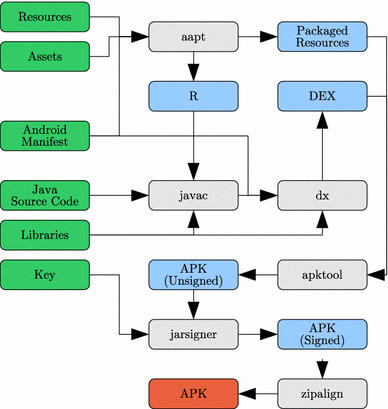
What programming languages are you looking to use to build Android applications?
Android developers are looking to build chat and messaging apps, games, calculators, notes, video players, weather apps, and more. These programs can be built using the languages and frameworks mentioned below.
In addition, we suggest you read articles on mobile phone programming. These articles can offer you some interesting ideas for designing successful, money-making Android apps.
1. Java language
Java is a good choice in this regard because, before Google officially supported Kotlin, it was the official language and the first language used to build Android applications. Java is also the second active language in GitHub, dating back more than 20 years.
To be more precise, if you focus on learning Java, you have so many educational resources that you will never have a problem understanding complex points.
In addition, the language is not expected to become obsolete in the short term and will not be replaced by another powerful alternative. As a novice, you should first learn the patterns and terms of this language, then move on to the topics needed to build Android applications.
Note, however, that Java lacks some of the features and flexibility of new languages. So, if you are using Swift and you want to learn Java, you have some limitations.
2. The language of Kotlin
Kathleen is the official language for Android application design that requires a Java virtual machine. More specifically, Kotlin applications are compiled to Java bytecode, allowing them to run on any machine that supports the Java Runtime Environment.
Most machines support the above environment, so Kotlin is a simple way to build multi-platform applications. With Kotlin, you get the best of Java without its drawbacks.
In addition, Kotlin’s syntax is simple, straightforward, and powerful, providing developers with a comfortable user experience. Kotlin is relatively new compared to the other languages we will mention, as it was created in 2011 and was not available to everyone until 2016. However, it is a free and open-source language that is evolving rapidly.
3. C # language
C # is a powerful language that incorporates all the features of the Java index and is strongly supported by Microsoft. In the past, the main problem with C# was that it was limited to Windows systems because it relied on the .NET Framework. But now the situation has changed. When Microsoft opened .NET in 2014 and acquired Xamarin, it enabled developers to build C# projects that could run on various platforms.
Developers can now use Xamarin. Android and Xamarin.IOS with Visual Studio or Xamarin Studio to build Android applications. Learning C# has many benefits, not only in building Android applications but also in building desktop, network, and other applications. It is usable and, in addition, is the primary language for making games using the Unity game engine. In the past, Xamarin was available to developers for a fee, but today it is free.
4. Python language
While Android does not natively support Python, some tools let you write Python programs and convert them into APKs to run on Android devices. Kivy is one of the most powerful solutions in this field. It is open source, runs on Windows, Mac, and Linux, and supports Android and iOS.
Note, however, that the Android apps you design with Kivy tend to have larger APKs, run more slowly, and perform less well than regular apps.
5. Combination of JavaScript, HTML5, and CSS languages
These three languages, the foundation of front-end web programming, have evolved significantly since their early versions. So that developers can write applications for phones and computers using them. In other words, you have a web-based application running as an offline application.
To build Android applications, you can use Adobe Cordova, an open-source framework that supports iOS, Windows 10 Mobile, Firefox, BlackBerry, and more.
Despite its good performance, Cordova forces developers to work harder to build Android apps. That’s why many people use the Ionic Framework. Another option is React Native.
This library can be used in the Android, iOS, and Windows ecosystems.
6. Lua language
Lua is a relatively old written language used to complement programs written in C, VB.NET, etc. It has its characteristics. For example, arrays in this language start at one instead of 0 and have no native classes.
However, Lua can be used as a primary language in some areas, such as the Corona SDK. Developers can use Corona to build powerful Lua applications that run across various ecosystems, including Mac, Android, iOS, Apple TV, and Android TV.
7. C and C++ Programming Languages
Google has provided two programming markets for building Android applications. SDK uses Java, and NDK uses the old and powerful C and C++ languages. The key point is that you cannot write a program in C, C++, or Java, but the NDK lets you create a native library and use its capabilities in Java code.
In most cases, you do not need to use NDK, as it is typically used when you need to perform tasks and improve performance. NDK allows you to use C and C++ libraries in your applications.
FAQ
Which language is the official and recommended choice for Android development?
Kotlin — since its official adoption for Android in 2017, Kotlin has become the recommended language for new Android projects due to its concise syntax, null safety, and modern features.
Can I still use Java for Android apps today?
Yes — Java remains fully supported, and many existing Android apps still use it; it’s a viable choice especially if you have prior Java experience or maintain older codebases.
What about languages other than Kotlin or Java — are they usable for Android development?
Yes — languages such as C++ (via Android NDK) are useful for performance-critical or native-level code, and cross-platform solutions using Dart (with frameworks like Flutter) allow you to build Android apps (and even iOS) with a single shared codebase.