



Protocols are policies, or more precisely, contracts, that enable communication between networks.
The Role Of Protocol guarantees the quality of communication and ensures that information is transmitted with complete accuracy and health. In this article, we intend to review the role of protocols in the network.
What is the definition of a protocol in computer networks?

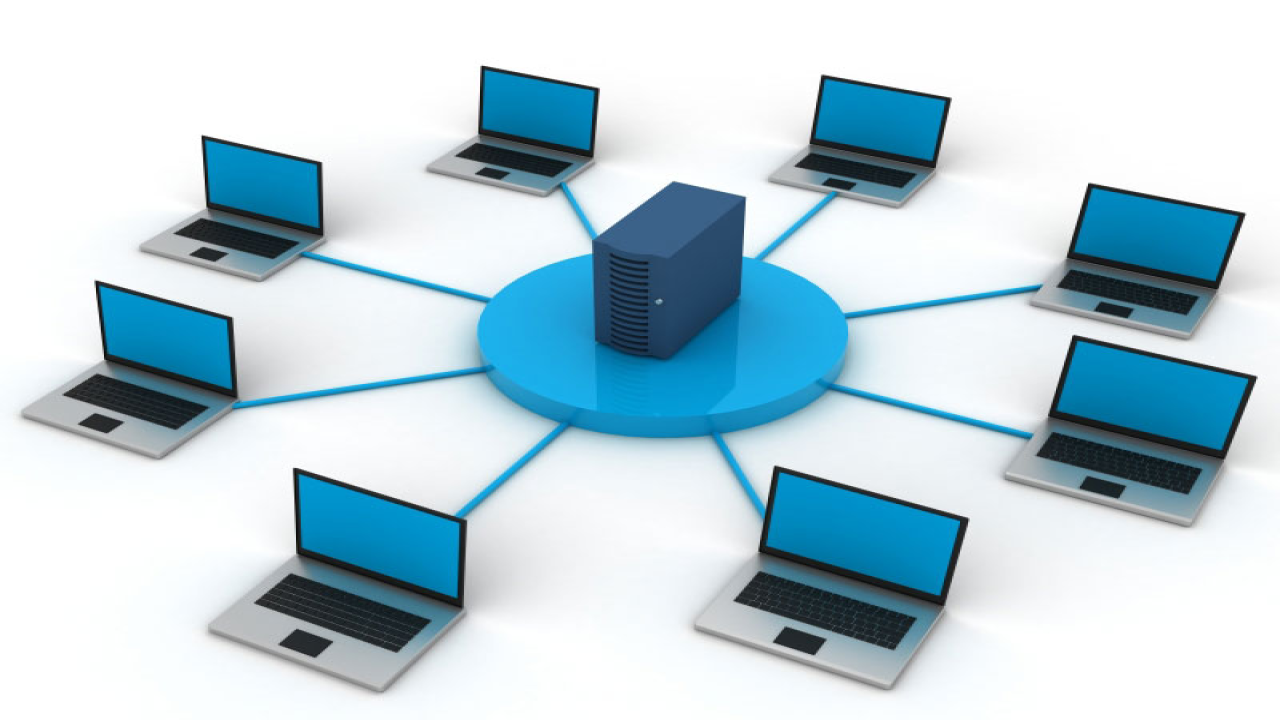
In the simplest terms, a protocol is the language of computers. Typically, a network consists of several components that use their software and hardware to communicate with the network, but all network components can interact through communication protocols.
Computers need a minimum of basic information to exchange information, such as how information is formatted and how much data each party sends and receives.
For example, suppose a computer sends an 8-bit packet while the other is waiting to receive a 16-bit packet. In this case, due to heterogeneity, bandwidth is wasted; on the contrary, it causes some information to be lost. Protocols are used to solve such problems.
Network protocols allow the two parties to communicate and understand each other’s language, regardless of the hardware they use.
For example, an iPhone can send information to Android devices using standard email protocols, or a Windows computer can receive standard web protocols from a web page hosted on a Unix web server.
If two computers use the Internet Protocol (IP), they can communicate; however, if one of them does not have the protocol, they cannot speak. Based on the definitions we have given, the protocol in the network refers to the set of rules that format and process data.
These rules, or in other words, the accuracy of the policies, are as follows:
For example, an iPhone can send information to Android devices using standard email protocols, or a Windows computer can receive standard web protocols from a web page hosted on a Unix web server.
If two computers use the Internet Protocol (IP), they can communicate; however, if one does not have the protocol, it cannot communicate.
Based on our definitions, the protocol in the network refers to the set of rules that format and process data.
- What kind of data can be transmitted?
- What commands are used to send and receive data?
- How data is transmitted.
Different protocols are used in cyberspace or the Internet, each responsible for processing a specific type of information.
Typically, protocols are examined in the OSI model and the layer to which they relate.
The most critical OSI reference model protocols are:
Physical layer protocols: At the hardware level, they enable communication between devices. These protocols include PPP, DSL, and Wi-Fi. Both devices must support the same physical-layer protocol for transferring data between them.
CRvtklhay network layer: routing protocols transmit data over the Internet to reach their destinations. These protocols include IPv4 and IPv6.
Transfer Layer Protocols specify how data is sent, received, and approved. This section includes TCP and UDP.
Application layer protocols include a set of instructions for specific applications. These protocols include HTTP, IMAP, and FTP. Browsers use the Secure Hypertext Transfer Protocol (HTTPS) to stream packets via encryption. Email clients use the SMTP protocol to send messages to mail servers.
Network protocol segmentation
In general, network protocols are divided into the following three groups:
Communication protocols: These protocols govern the communication between network devices. These protocols have various functions, the most important of which are file transfer and Internet access.
It should be noted that the protocols of this group are used in both analog and digital communication modes.
Management protocols: Network management protocols improve the performance of computer networks and optimize operations. These protocols also enhance the performance of widely used network devices, such as routers and switches, enabling them to exchange information without delay.
Security protocols: Their main task is to encrypt packets and implement policies that prevent unauthorized individuals or devices from connecting to the network or exchanging information with it.
Types of Network Protocols
A wide range of protocols is used in local area networks, wireless, wired, wide, urban, etc., some of which are specific to particular purposes and others for general applications.
The following are some of the most widely used and standard network protocols:
Internet Protocol: An IP protocol is a network layer protocol responsible for routing packets.
Internet Protocol Security (IPsec) encrypts and authenticates IP communications over a virtual private network. IPsec is not technically a protocol because a set of ESP protocols is called the Encapsulating Security Protocol, AH is called the Authentication Header, and SA is called the Security Associations.
Internet Control Message Protocol (ICMP): The ICMP protocol reports errors and provides network status information. For example, if a router fails to receive a packet, it sends an ICMP message to the packet source. Some network administrators disable the above protocol to counter security attacks.
TCP is a transport-layer protocol that ensures data is delivered to the destination. TCP and IP protocols typically interact with one another. Hackers use a combination of the above protocols to implement various types of attacks, the most important of which is DDoS.
HTTP: The hypertext transfer protocol monitors and formats raw data over the network so that applications such as browsers can use it directly.
TLS/SSL: TLS and SSL are subsets of the HTTPS protocol that monitor the encryption process.
UDP: Works on the transfer layer. It performs faster than TCP but is less reliable. UDP is mainly used in video streaming and gaming, where data reception speed is essential.
SSH: The Secure Socket Shell protocol provides secure access to computers, even when the computer is connected to an insecure network. SSH is a valuable protocol for most network administrators because it enables them to communicate with systems remotely.
Telnet: This protocol allows you to communicate remotely with devices. From the Telnet Client, the user can access the command-line interface of the remote device where the Telnet Server application runs.
SMS: The Short Message Service protocol allows sending and receiving messages on the mobile network. This is a text protocol, so the MMS protocol (Multimedia Messaging Service) is used to send images and videos.
FTAM (File Transfer Access Method) is a layer-7 protocol that specifies the ability to transfer files between computers on a network.
SMTP (Simple Mail Transfer Protocol) is used to send emails. When you send an email, the SMTP protocol transfers information from one server to another on the Internet. Simply put, SMTP sends information to a server that may use POP or IMAP protocols to send or receive emails.
SNMP (Simple Network Management Protocol) operates at layer seven and monitors and manages networked devices on local area networks. In addition, the above protocol can manage system bandwidth and resources.
NetFlow: The NetFlow protocol monitors IP traffic flow, although it offers more network management and monitoring applications.
SMB: The Server Message Block (SMB) protocol operates at Layer 7 and allows users to access resources and files on servers.
DNS: The Domain Name System protocol translates IP addresses into the network equivalent of their names (domain names).
PPP: The Point-to-Point protocol is used to transfer multi-protocol data between two computers that are directly connected. Because the above protocol performs data transfer in bytes, it is used in Broadband communications requiring high loading and speed. Since the above protocol operates at the data link layer, data is sent in frames.
DHCP: The Dynamic Host Configuration Protocol works in Layer 7 of the OSI model and is used dynamically to assign IP addresses to devices within the network or hosts.
FAQ
What is a protocol in a network?
A protocol is a set of rules that defines how data is formatted, sent, received, and interpreted by devices in a network.
Why are protocols necessary?
They ensure different devices — even from different vendors — can understand each other, exchange data reliably, and stay compatible.
What functions do protocols provide beyond data transfer?
They handle addressing and routing of data, error checking and correction, flow control, and security (encryption/authentication) when needed.